


WHAT IS DIATHERMY / TECAR THERAPY?
State-of-the-art equipment that uses high-frequency currents (around 448 kHz) to heat internal tissues for therapeutic or aesthetic purposes.
This medical treatment uses high-frequency currents to generate heat and bio-stimulation within the tissues.
When the current passes through a tissue, it causes the particles within it to move, which in turn produces heat. Rather than being passively applied from outside, the heat is generated by the body through diathermy / tecar therapy. The heat in the tissues in turn causes vasodilation, meaning increased blood and oxygen flow. This process speeds up cell metabolism and facilitates the exchange of substances across cell membranes, helping to improve drainage and eliminate waste products.
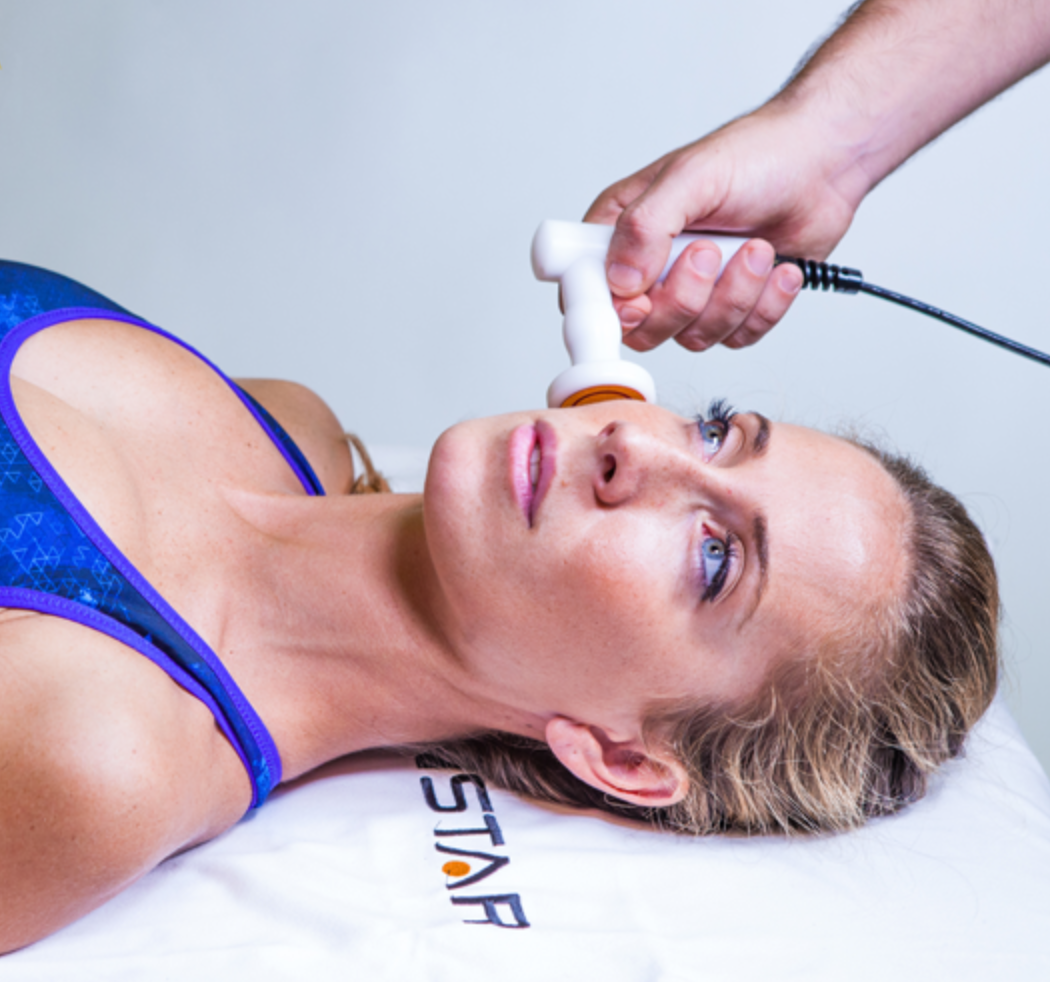
Diathermy has long been used in orthopaedic and trauma rehabilitation and is now one of the best-known, most recommended and most effective treatments. Its widespread use is due to clinical evidence of its effectiveness, its safety, ease of application and the wide range of conditions it can treat. In recent years, advances in applicators and the addition of adjustable frequencies have enabled diathermy to be used in an even wider range of treatments, including aesthetic physiotherapy.
Absolute contraindications are those established by law for all medical electrical devices: pregnancy, patients with pacemakers and patients with cancer.
In aesthetic physiotherapy, contraindications refer to pre-existing conditions that should be considered before starting treatment. The practitioner may also consult the patient’s doctor to adjust the device’s frequency and power and achieve the best results without causing harm. These include telangiectasia and other venous conditions, skin infections, psoriasis and, in general, dermatological conditions in the treatment area or impaired sensitivity to temperature.
When correctly applied to various aesthetic concerns, results can be seen from the first session. For fat accumulation, panniculopathy or fluid retention, more treatments may be needed (up to 5–6) to achieve visible results. However, after the first treatment, clients may notice improved skin tone and texture, along with a pleasant feeling of lightness and firmness.
DIATHERMY AND ANTI-AGEING TREATMENT
As mentioned above, over time the skin loses tone, elasticity and firmness. Diathermy stimulates fibroblasts to produce collagen and elastin, improving the skin’s appearance; patients describe it as a “filling effect”.
Heat has an immediate tightening effect on collagen fibres, while biostimulation makes the results long-lasting, especially with ongoing maintenance. Excellent results can be achieved on all areas of the body: face, neck, décolleté, arms, abdomen, legs and vulva. The skin visibly becomes more toned, and structures such as the facial oval are reshaped.

DIATHERMYAND PANNICULOPATHY TREATMENT
Adipocytes are the cells responsible for storing energy. When we consume more calories than we burn, they are stored inside the adipocytes as an energy reserve. If this process continues over time, the adipocytes grow larger and begin to compress the blood vessels, obstructing microcirculation and hindering the exchange between the inside and outside of the cells. These enlarged adipocytes then trigger an inflammatory response in the tissue.
In the most advanced stage of panniculopathy, the connective tissue becomes fibrotic, forming hard nodules that are painful to the touch. The heat generated by diathermy improves vascularization, increasing oxygen supply and making it easier to eliminate catabolites. Restoring microcirculation and improving cellular exchange reduces swelling and improves the appearance of the skin.

Diathermy treatments can use two different types of electrodes: capacitive and resistive.
The capacitive electrode releases more energy in the layers just beneath the electrode, while the resistive electrode releases more energy at a high-to-low impedance interface.
When we ask for a muscle contraction, we can observe a change in the impedance the muscle offers to the passage of the current. This creates a point where more energy is released. Knowing this, we can vary how we use the different electrodes, even within the same session, to provide a complete treatment. We target fat and cellulite deposits, stimulate the muscles with specific exercises, and address fluid retention to improve drainage.
The result is an aesthetic improvement accompanied by better tissue health, which the client experiences as a feeling of lightness and firmness.
Diathermy plays a fundamental role in physio-aesthetics. Its ability to improve a range of imperfections on both the body and face, in deeper or more superficial tissues, together with the pleasant sensation during treatment, makes it a favourite among therapists and clients.
As we have seen, aesthetic concerns can have different causes. Some, such as genetics and hormones, cannot be changed, while others, such as diet, hydration and physical activity, can. Diathermy results are visible from the first treatments and last over time. These effects are more noticeable and longer-lasting when clients are taught how to care for their bodies and given maintenance recommendations, such as eating well, drinking enough water, supporting the skin barrier with creams, or doing simple exercises to improve circulation and muscle activation.